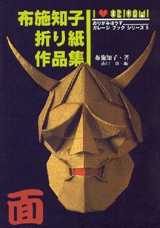
The Mask
by Tomoko Fuse
- Published:
- 1997 by Gallery Origami House
- Pages:
- 200
- Binding:
- Paperback
- Language:
- Japanese
- ISBN-13:
- 9780356846040
- ISBN-10:
- 0356846040
Buy from: origami-shop.com
Buy from: Amazon.com
Buy from: Amazon.jp

Buy from: Amazon.com
Buy from: Amazon.jp
| Skill Level | Complex |
|---|---|
| Clear diagrams? | Yes |
| Tinted diagrams (to show 2 sides of paper)? | Yes |
| Photos of completed models? | Yes - beautiful pictures! |
| Is there indication to the model size resulting from size of starting paper? | No |
| Are the models "Pure" origami (From a single square - no cuts)? | Yes |
Overall Impression
Tomoko Fuse is mostly known for her beautiful boxes and modular origami. Here she uses her skills to create magnificent origami masks representing various types of the Japanese theater. They are superbly detailed, and each has a unique expression.
The Masks are divided into several sections:
Gigaku masks
A performing art imported in the sixth century that included a procession of masked figures followed by dances and mimes accompanied by flutes, drums, and cymbals. The lion dance (shishi mai) was a featured part of the performance.
Bugaku masks
Court dance imported from the continent before the eighth century. Elaborately costumed and masked figures perform slow, stately dances to instrumental music called gagaku.
Gyoudou masks
Kyogen masks
Kyogen is the classical comic theater which balances the more serious Noh.
Noh masks
Noh theater combines the elements of dance, music, masked song and poetry.
Shuu saku bako masks ("Work in Progress")
Special thanks to Michael and Lar for assisting with translations!
There are 27 Origami Designs in The Mask:
| Design | Designer | Page | Details | Photo |
|---|---|---|---|---|
|
|
||||
| Suiko-oh - Drunken King | Tomoko Fuse | 22 | Square Gigaku mask: The drunken king of Ko (the country that used to be to the west of China). Symbolizes the harvest. Appears with the drunks of Ko. | 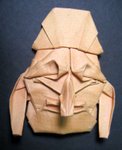 Folded by Phillip West |
| Suiko-jyuu - Attendant | Tomoko Fuse | 30 | Square Gigaku mask: The 8 drunk attendants who appear at the end of Gigaku wear these masks. Each of them has a unique humorous expression, indicating that he is drunk. | 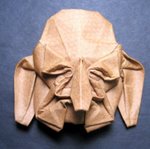 Folded by Phillip West |
| Rikishi - Bodyguard | Tomoko Fuse | 38 | Square Gigaku mask: Buddhist guardian of Gojo the maiden (defends her honour). | 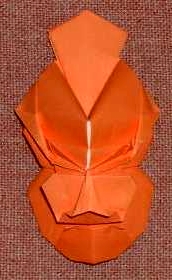 Folded from a square of origami paper by Gilad Aharoni |
| Tidou - Road keeper | Tomoko Fuse | 43 | Square Gigaku mask: Road keeper. Worn by the actor leading the procession. | 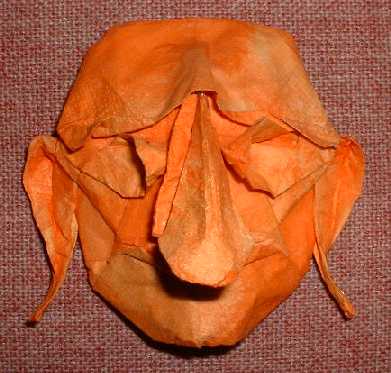 Folded from a paper napkin back-coated with foil by Gilad Aharoni |
| Batou | Tomoko Fuse | 50 | Square Bugaku mask: An angry son whose father was killed by a wild animal, and he is seeking revenge. | 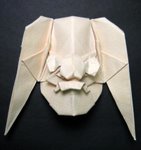 Folded by Phillip West |
| Sanjyu | Tomoko Fuse | 56 | Square Bugaku mask: Wearing a crown made of dragons, mask worn by warriors fighting with swords. | 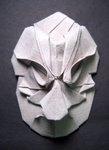 Folded by Phillip West |
| Chikyuu | Tomoko Fuse | 63 | Square Bugaku mask: Represents celebration of long-lasting peace, has prominent nose. | 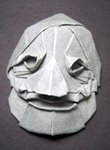 Folded by Phillip West |
| Kotokuraku | Tomoko Fuse | 69 | Square Bugaku mask: Used in a comic dance of drunk characters. As many as six performers appear, 3 with the hinged, swaying nose. | 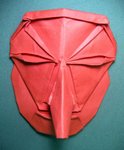 Folded by Phillip West |
| Koshikaki | Tomoko Fuse | 76 | Square Gyoudou mask: Carriage carrier's mask. | 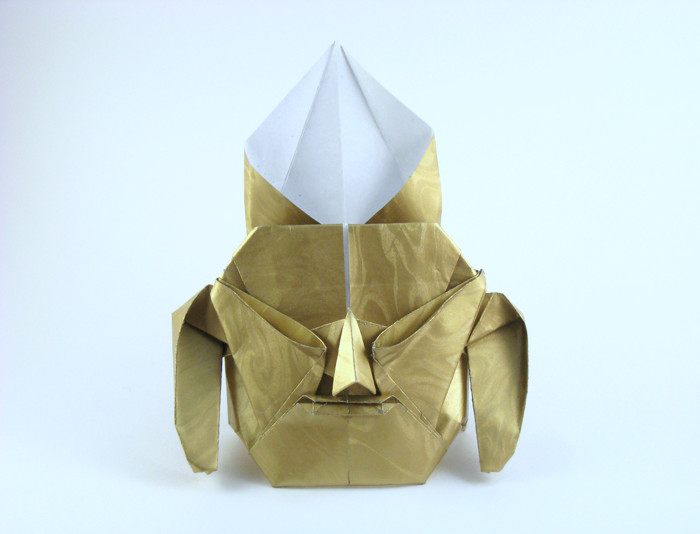 Folded from a square of moire scrapbooking paper by Gilad Aharoni |
| Batou | Tomoko Fuse | 82 | Square Gyoudou mask: Angry character. | 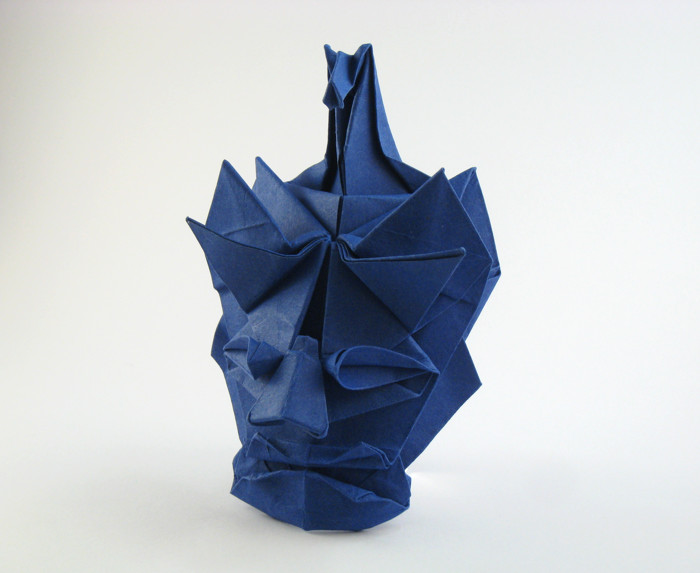 Folded from a square of Canson art paper by Gilad Aharoni |
| Kendatuba | Tomoko Fuse | 90 | Square Gyoudou mask: God that eats perfume and fights in the sky, another mask worn by carriers. | 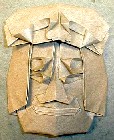 Folded by Jake Crowley |
| Bisyamon | Tomoko Fuse | 97 | Square Gyoudou mask: One of the seven lucky gods - God of Treasure, war and warriors. | 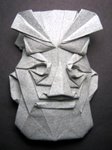 Folded by Phillip West |
| Ebisu | Tomoko Fuse | 106 | Square Kyogen mask: One of the seven lucky gods - God of fishermen, rice farmers, good fortune, commerce and the kitchen. | 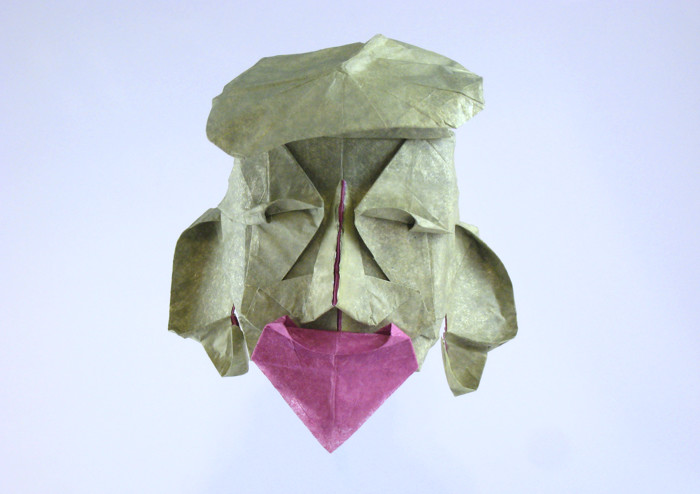 Folded from a square of Kathy Stevick's tissue-foil by Gilad Aharoni |
| Daikoku | Tomoko Fuse | 113 | Square Kyogen mask: Another one of the seven lucky gods - God of Wealth, prosperity, farmers, flood control and the kitchen. | 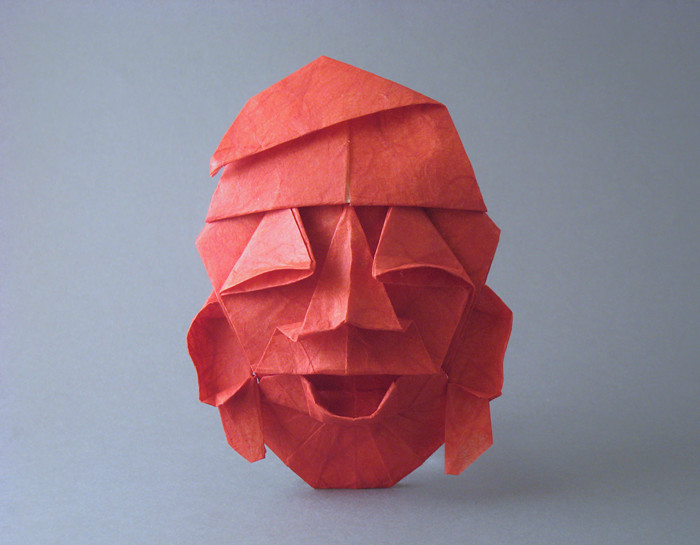 Folded from a square of Unryu paper by Gilad Aharoni |
| Kentoku | Tomoko Fuse | 118 | Square Kyogen mask: God representing horses, cows, dogs and octopii. | 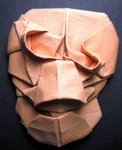 Folded by Phillip West |
| Buaku | Tomoko Fuse | 123 | Square Kyogen mask: Used to denote a devil or the King of Hell. Used to comic effect. | 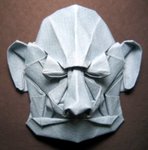 Folded by Phillip West |
| Obeshimi | Tomoko Fuse | 130 | Square Noh mask: The face of the mythical Tengu (spirit of the earth). Beshimi means "mouth firmly clamped shut". Protects others from evil spirits and demons. | 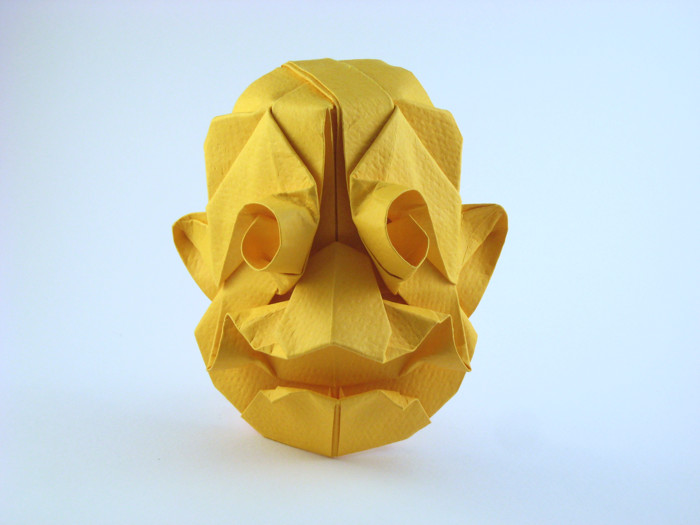 Folded from a square of Canson art paper by Gilad Aharoni |
| Okina | Tomoko Fuse | 136 | Square Noh mask: An old man with a long white beard, expressing wisdom. Worn on stage to represent "something in progress". | 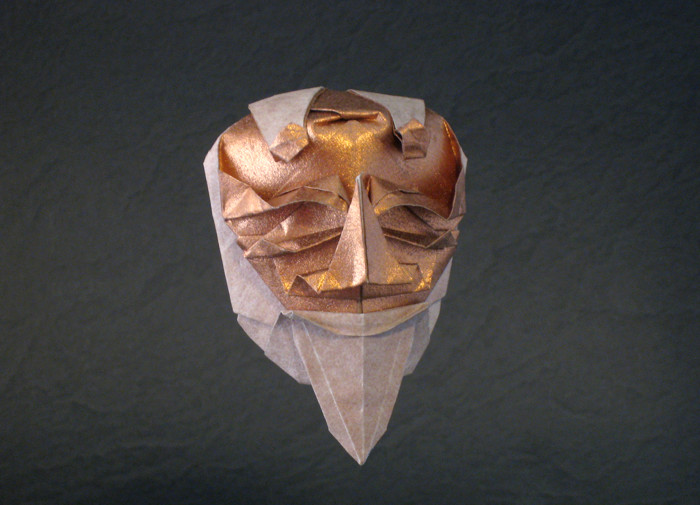 Folded from a square of Nicolas Terry's tissue-foil by Gilad Aharoni |
| Shikami | Tomoko Fuse | 144 | Square Noh mask: Demonic masculine spirit. | 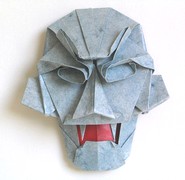 Folded by Herman Mariano |
| Yase-otoko | Tomoko Fuse | 150 | Square Noh mask: A ghost suffering in hell. | 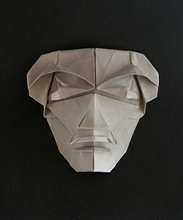 Folded by Rui Roda |
| Hannya | Tomoko Fuse | 156 | Square Noh mask: A furious woman, turned into a demon from jealousy and anger. | 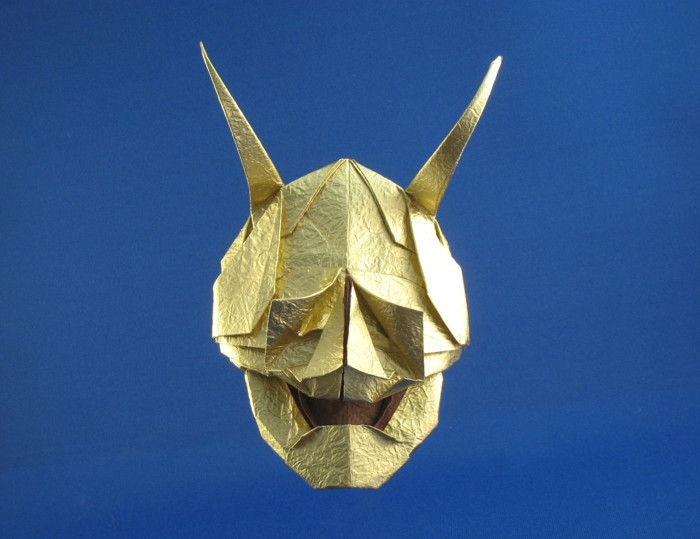 Folded from a square of double-sided Momigami paper by Gilad Aharoni |
| Namanari | Tomoko Fuse | 163 | Square Noh mask: Vengeful lady of the full moon, a less mature form of Han-nya. | 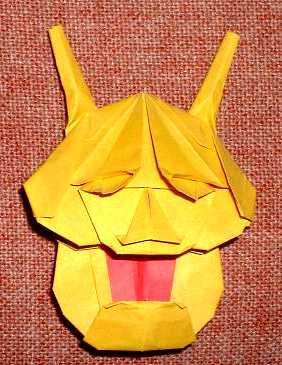 Folded from a square of origami paper by Gilad Aharoni |
| Onna-no-men | Tomoko Fuse | 170 | Square Noh mask: Woman This is a development by Fuse herself, inspired by women in Noh theater. | 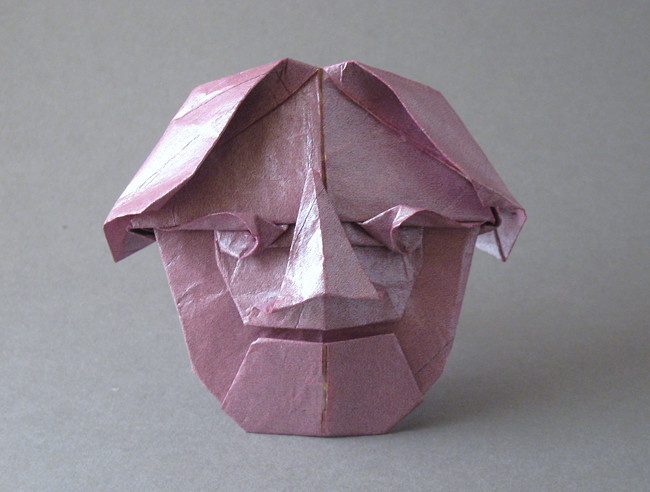 Folded from a square of tissue-foil by Gilad Aharoni |
| Hannya-funno-kashira | Tomoko Fuse | 174 | Square Noh mask: Hannya puppet. |  Folded by Alfredo Perez Jimenez |
| Taikoji | Tomoko Fuse | 182 | Square Shuu saku bako mask: "Child smiling innocently". | 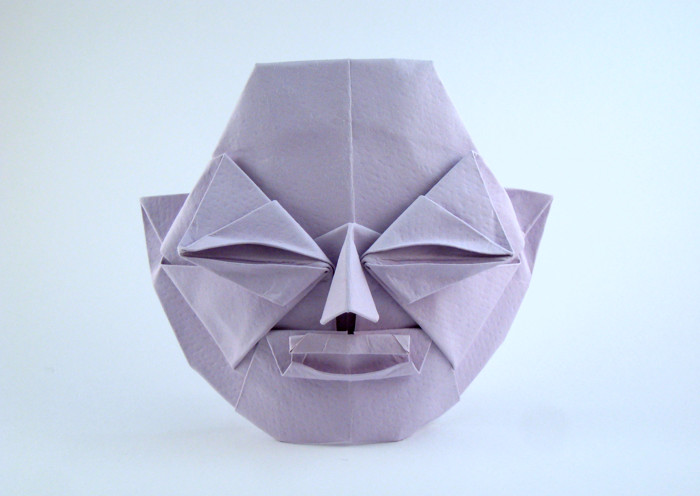 Folded from a square of art paper by Gilad Aharoni |
| Haremen | Tomoko Fuse | 188 | Square Shuu saku bako mask: Old lady. | 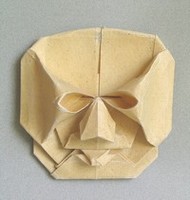 Folded by Herman Mariano |
| Usobuki | Tomoko Fuse | 193 | Square Shuu saku bako mask: Demon representing something weak. | 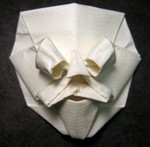 Folded by Phillip West |